Pomodoro vs Time Blocking: Which Works Better?
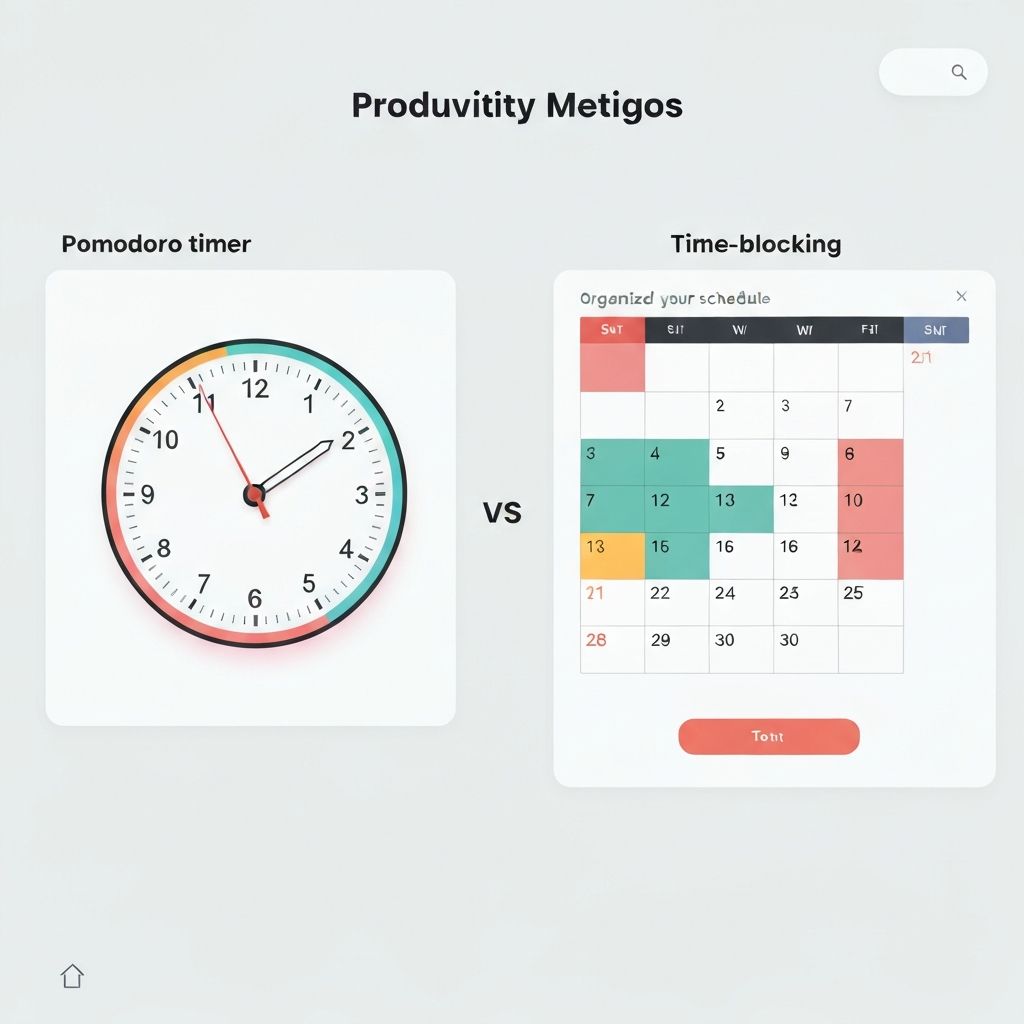
Both Pomodoro and Time Blocking are battle-tested productivity techniques. But which one is better — and can you combine them? Here's the definitive guide.
What Is the Pomodoro Technique?
Developed by Francesco Cirillo in the late 1980s, Pomodoro involves working in focused 25-minute intervals (called pomodoros) separated by 5-minute breaks. After 4 pomodoros, you take a longer 15-30 minute break. The technique leverages urgency and regular rest to sustain concentration.
What Is Time Blocking?
Time Blocking, popularized by Cal Newport, means assigning every hour of your workday to a specific task or category of tasks. Instead of a to-do list, you have a schedule. You proactively decide when everything will happen, which eliminates the endless 'what should I work on next?' decision tax.
Where Pomodoro Excels
Pomodoro is excellent for tasks where you struggle to start or sustain focus: writing, coding, studying. The 25-minute constraint makes the work feel achievable. It also builds in mandatory breaks, preventing the burnout that comes from multi-hour marathons. It is ideal for solo, focused work.
Where Time Blocking Excels
Time Blocking is better for managing a complex schedule with multiple types of work. It forces you to be realistic about how long tasks take, prevents scheduling overload, and creates a plan you can actually follow. It works particularly well for managers and anyone with many meetings.
The Power Combination
The best approach is to use both: Time Blocking to plan your day at the macro level (9–11 AM: deep work on project X), and Pomodoro to execute within each block (two 25-minute focused sessions + breaks). You get the structure of Time Blocking and the focus mechanics of Pomodoro.
How Future Task Supports Both
Future Task's Pomodoro feature lets you run timed sessions directly linked to your tasks. Schedule your deep work blocks as tasks with specific times, then use Pomodoro mode to execute them. Your focus time is automatically tracked in your stats, creating a feedback loop that helps you plan better each week.